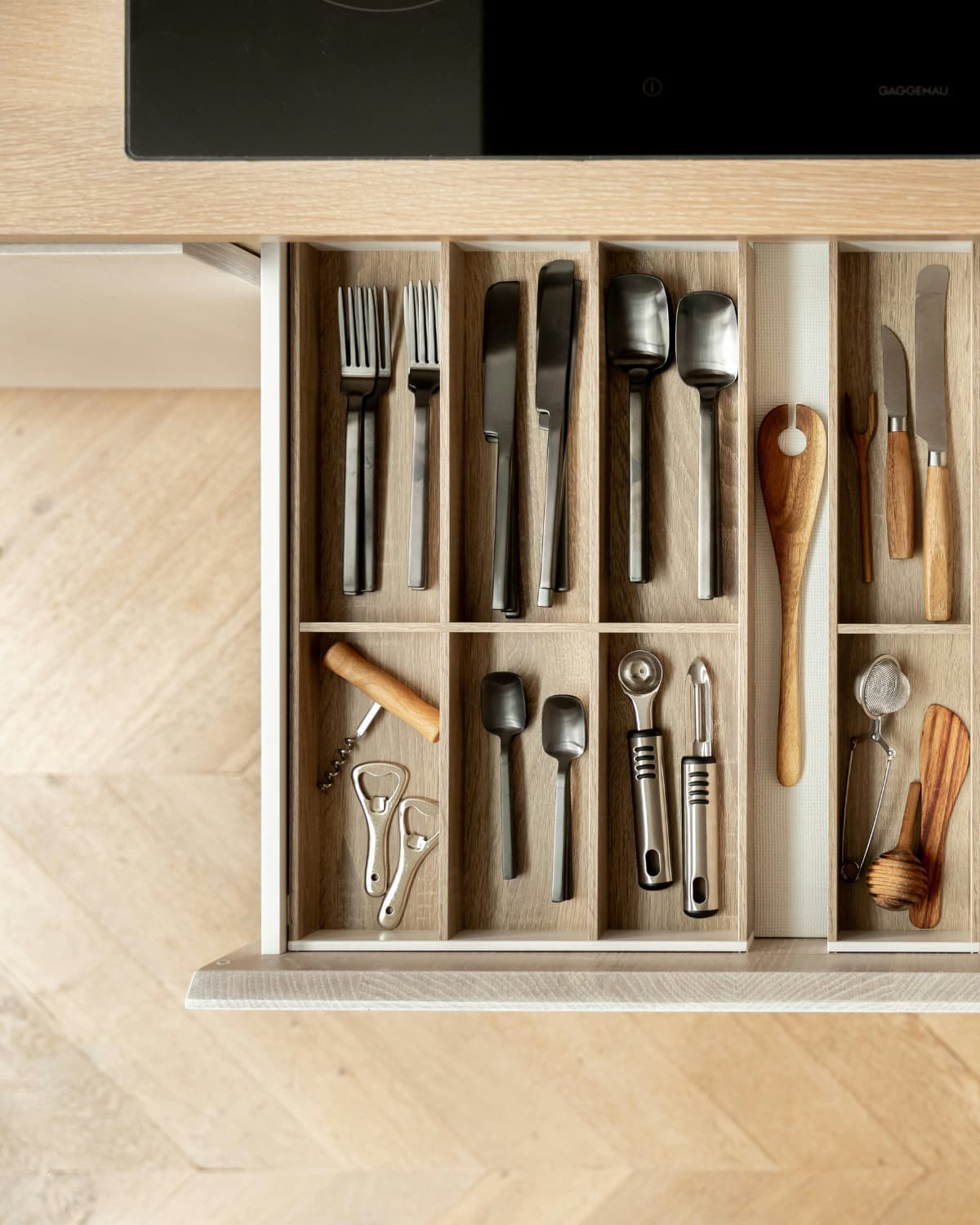
Kitchen drawer depth directly affects how usable your storage actually is. Drawers that are too shallow waste horizontal space; drawers that are too deep become cluttered and hard to organize.
This guide explains standard kitchen drawer depths, when to adjust them, and how to choose the right depth based on what you store, especially in small kitchens and apartments.
Standard Kitchen Drawer Depths (Quick Answer)
Most kitchen cabinet drawers fall into one of these standard depth ranges:
| Drawer Type | Typical Drawer Depth |
|---|---|
| Shallow drawers (utensils) | 12–16 inches |
| Standard base cabinet drawers | 18–22 inches |
| Deep drawers (pots, pans) | 22–24 inches |
| Extra-deep drawers | 24–30 inches (less common) |
Drawer depth refers to the interior usable depth, not the cabinet depth itself.
Why Drawer Depth Matters
Correct drawer depth improves:
- Visibility (no stacked chaos)
- Access (everything reachable without digging)
- Organization efficiency
- Long-term usability
In small kitchens, drawer depth often matters more than drawer width.
Drawer Depth by Use Case
1. Utensil & Cutlery Drawers
Ideal depth: 12–16 inches
Best for:
- Cutlery trays
- Cooking utensils
- Small tools
Deeper drawers here add no benefit and often lead to clutter.
2. Standard Storage Drawers
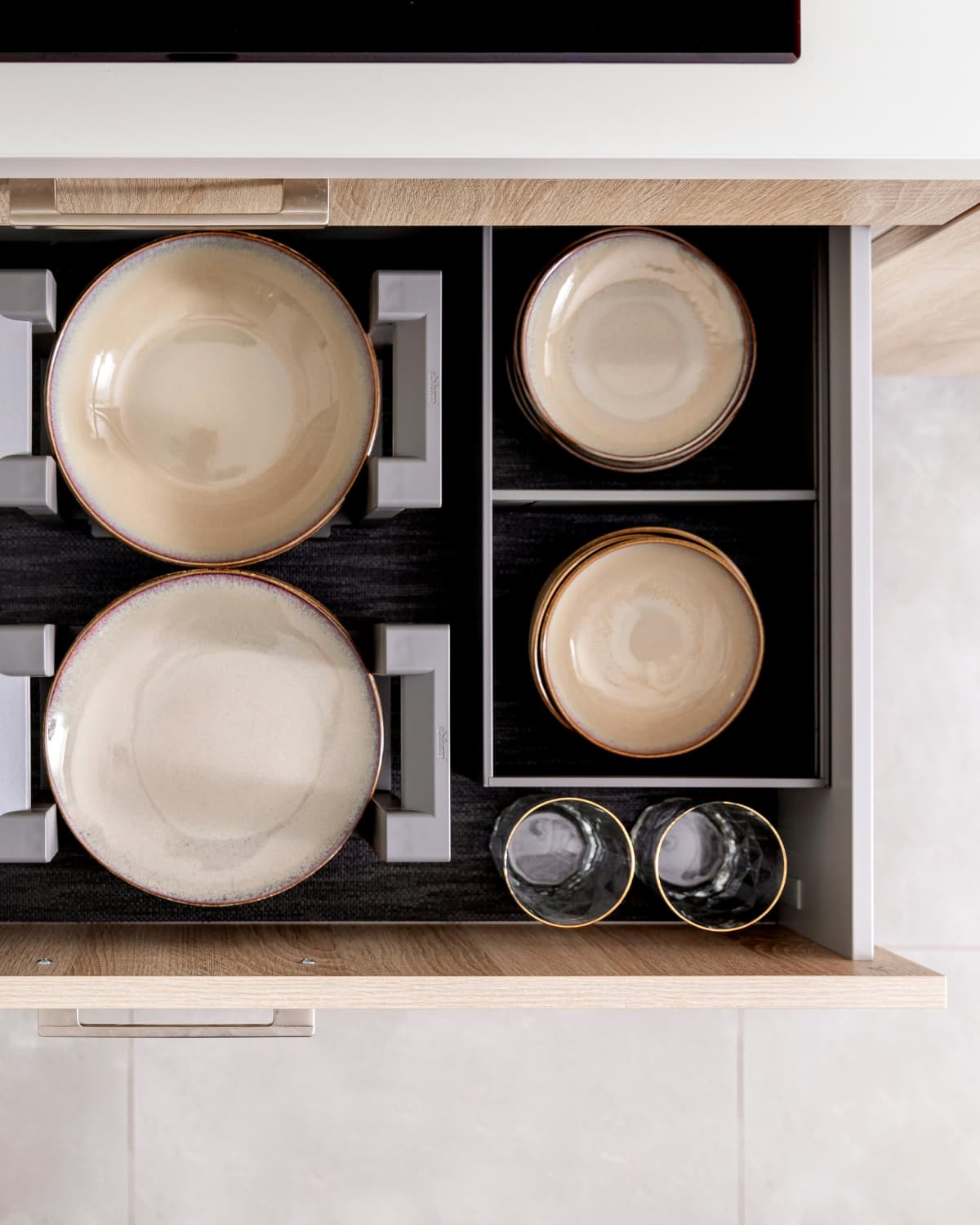
Ideal depth: 18–22 inches
Best for:
- Plates
- Bowls
- Food containers
- Wraps and foils
This depth balances storage capacity and accessibility.
3. Deep Drawers for Pots and Pans
Ideal depth: 22–24 inches
Best for:
- Pots and lids
- Mixing bowls
- Small appliances
Deep drawers work best when combined with vertical dividers or peg systems to prevent stacking.
4. Extra-Deep Drawers (When They Make Sense)
Depth: 24–30 inches
Only recommended if:
- Cabinet depth allows it
- Drawers are fully extendable
- Items are large and used frequently
In small kitchens, extra-deep drawers often reduce usability rather than improve it.
Standard Cabinet Depth vs Drawer Depth (Important Distinction)
| Cabinet Type | Typical Cabinet Depth | Usable Drawer Depth |
|---|---|---|
| Base cabinets | 24 inches | ~21–22 inches |
| Shallow base cabinets | 21 inches | ~18–19 inches |
| Custom deep cabinets | 27–30 inches | ~24–27 inches |
Drawer depth is always shorter than cabinet depth due to hardware and clearance requirements.
Common Drawer Depth Mistakes
Too Deep Without Dividers
Deep drawers without structure quickly become disorganized.
Assuming Deeper Is Always Better
Beyond ~22 inches, access becomes harder unless drawers are carefully planned.
Ignoring Drawer Slides
Shallow drawers with poor slides often feel smaller than deeper drawers with full extension.
Practical Drawer Depth Planning (Step-by-Step)
- List what you want to store
- Measure the largest item
- Add 1–2 inches of clearance
- Choose the shallowest depth that still fits
Shallower drawers often outperform deeper ones when space is limited.
Drawer Depth Cheat Sheet
- Cutlery & utensils → 12–16 inches
- Plates & containers → 18–22 inches
- Pots & pans → 22–24 inches
- Bulk storage → only if fully extendable
FAQ: Kitchen Drawer Depth
Is 24 inches too deep for a drawer?
Not necessarily, but only if the drawer fully extends and includes internal organization.
Can I mix drawer depths in one kitchen?
Yes. Mixing shallow and deep drawers usually improves overall efficiency.
Are deeper drawers better for small kitchens?
Often no. Shallow, well-organized drawers are usually more effective.
Final Takeaway
- 18–22 inches is the most versatile drawer depth for kitchens
- Deeper drawers require structure to stay usable
- In small kitchens, controlled depth beats maximum depth
Choose drawer depth based on what you actually store, not generic layouts.
Useful related post → [How Many Inches Between Kitchen Shelves? Standard Spacing Guide]
This post may contain affiliate links. As an Amazon Associate, we earn from qualifying purchases.