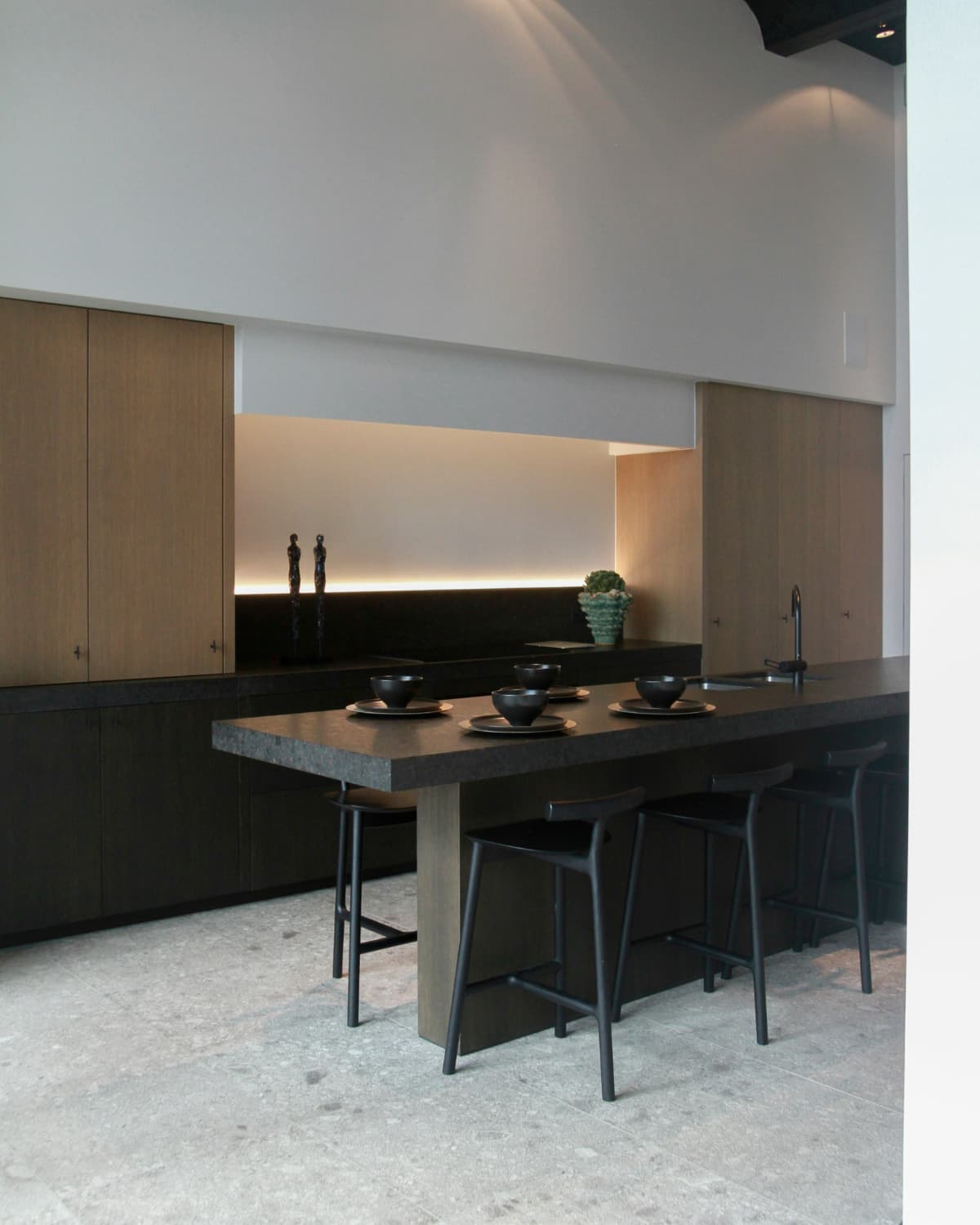
The space between your countertop and upper cabinets affects comfort, usability, and appliance clearance. Too little space makes prep awkward; too much space wastes vertical storage.
This guide explains standard space between countertop and upper cabinets, when to adjust it, and how to choose the right spacing for real kitchens, especially for small apartments.
Standard Space between countertop and upper cabinets
For most kitchens, the recommended distance between the countertop and the bottom of upper cabinets is:
18 inches (45–46 cm)
This measurement balances:
- Comfortable working height
- Appliance clearance
- Visual proportion
Why This Spacing Matters
Proper clearance affects:
- Ease of food prep
- Visibility and lighting
- Ability to use small appliances
- Overall kitchen ergonomics
If cabinets are mounted too low, daily tasks become uncomfortable.
The same spacing logic applies to shelving, as explained in
[How Many Inches Between Kitchen Shelves? Standard Spacing Explained]
Correct clearance solves only one part of the problem. In many kitchens, frustration comes from how cabinet spacing interacts with drawer depth, appliance placement, and storage layout as a whole.
If your kitchen still feels awkward despite following standard measurements, [The Small Space Fit Kit] helps you evaluate spacing, storage, and circulation together so dimensions work in real daily use, not just on paper.
Standard Spacing by Kitchen Setup
1. Standard Kitchens
Clearance: 18 inches
Works for:
- Most prep tasks
- Small appliances
- Average user height
2. Kitchens with Tall Appliances
Clearance: 18–20 inches
Recommended if you frequently use:
- Stand mixers
- Coffee machines
- Air fryers
3. Compact or Small Kitchens
Clearance: Still 18 inches (do not reduce)
Reducing clearance below 18 inches rarely improves storage and often makes the kitchen feel cramped.
In small apartments, kitchen discomfort is rarely caused by one wrong measurement. It usually comes from several small spacing decisions that compound over time.
For a practical way to map your kitchen layout and avoid stacking mistakes, [The Small Space Fit Kit] walks through clearance, cabinet height, and storage planning step by step using real apartment examples.
For small-space planning logic, read:
[Best Space Saving Furniture for Small Apartments: Complete 2026 Guide]
Clearance vs Cabinet Height (Important)
Clearance does not change based on cabinet height.
| Upper Cabinet Height | Clearance Above Counter |
|---|---|
| 30 in | 18 in |
| 36 in | 18 in |
| 42 in | 18 in |
If you need more storage, increase cabinet height, not reduce clearance.
Common Mistakes to Avoid
Reducing Clearance for “More Storage”
This compromises usability and safety.
Ignoring Lighting
Lower cabinets block task lighting and cast shadows.
Designing Around Rare Appliances
Design for daily use, not occasional appliances.
Step-by-Step Planning
- Confirm countertop height (usually ~36 inches)
- Add 18 inches clearance
- Choose cabinet height based on ceiling height
- Ensure lighting fits within the clearance zone
Even when each step is followed correctly, layout conflicts are easy to miss without an outside perspective. Door swing, appliance depth, and circulation often create issues that measurements alone do not reveal.
If you want a focused review of your kitchen layout before committing to cabinets or appliances, [Small Apartment Storage Layout Fix Consultation] explains when a targeted layout check can prevent costly adjustments later.
For dimension-driven planning, reference:
[Standard Drawer Depth for Kitchen Cabinets (With Practical Examples)]
Countertop-to-Cabinet Clearance Cheat Sheet
- Standard → 18 inches
- Appliance-heavy kitchens → 18–20 inches
- Small kitchens → Never less than 18 inches
FAQ
Can I reduce clearance to 15 inches?
Not recommended for daily kitchens.
Does user height affect this spacing?
Rarely. Countertop height adjustments matter more.
Do open shelves change this rule?
They follow similar clearance logic for comfort and access.
Final Takeaway
- 18 inches is the standard for a reason
- Reducing clearance rarely improves usability
- Good spacing improves comfort more than extra storage
Design around daily use, not theoretical capacity.
Good kitchen design is not about squeezing in more cabinets. It is about spacing that supports comfort, visibility, and daily habits.
If you want to apply these principles beyond a single measurement and design your space with confidence, start with [The Small Space Fit Kit] or explore [Small Apartment Storage Layout Fix Consultation] for personalized guidance.
This post may contain affiliate links. As an Amazon Associate, we earn from qualifying purchases.