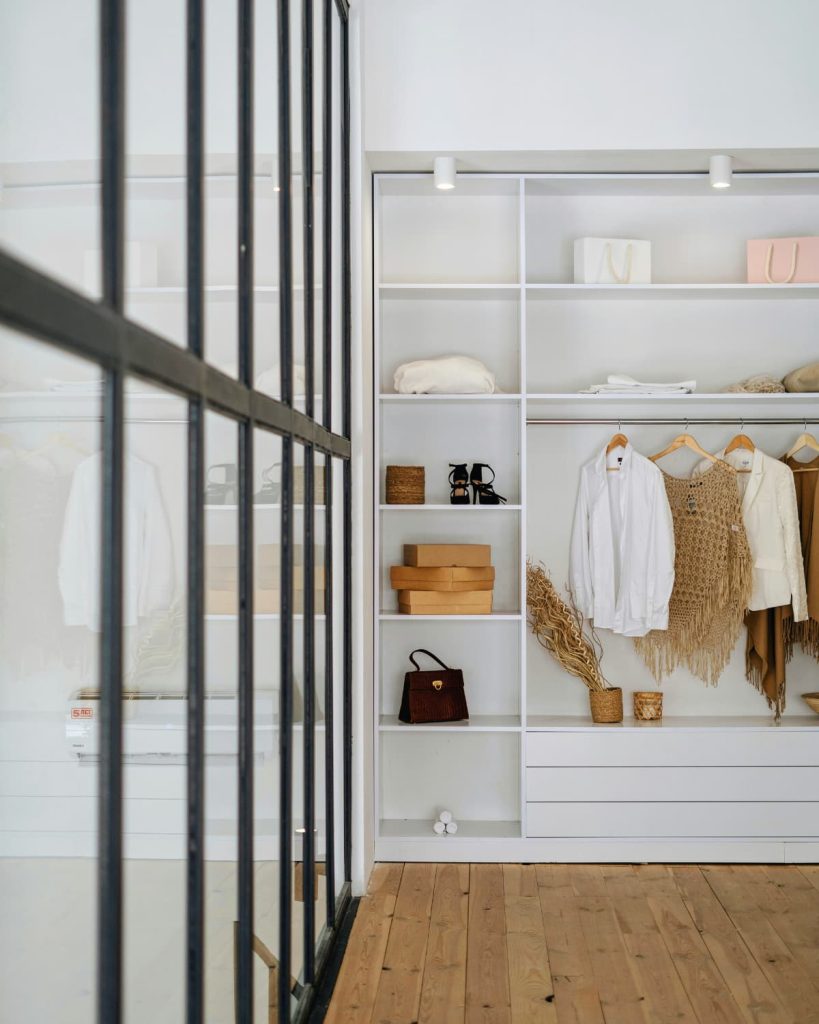
Closets fail less because they’re small and more because they’re poorly dimensioned. A closet that looks generous on paper can be frustrating in daily use if depth, width, or circulation space isn’t planned correctly.
This guide explains standard bedroom closet dimensions, compares reach-in vs walk-in closets, and shows how to choose the option that actually works for your room size, storage needs, and daily habits, especially in apartments and compact bedrooms.
What “Standard Closet Dimensions” Really Means
There is no single code-mandated size for residential closets. “Standard” refers to commonly used, functional rangesthat balance:
- Human reach and movement
- Typical clothing dimensions
- Shelf and hanging efficiency
- Room proportions
Good closet design prioritizes access and visibility over raw volume.
Quick Overview: Common Closet Dimensions
| Closet Type | Typical Depth | Typical Width |
|---|---|---|
| Reach-in closet | 24 inches | 5–8 ft |
| Compact walk-in | 48–60 inches | 6–8 ft |
| Standard walk-in | 72+ inches | 8+ ft |
Depth determines what fits; width determines how much you can organize; circulation determines whether it’s usable.
Reach-In Closets: When They Work Best
Standard Reach-In Dimensions
- Depth: ~24 inches
- Width: 5–8 feet (or more)
- Doors: Sliding or hinged
Why 24 inches works:
- Hanging clothes need ~22–24 inches (including rod and clearance)
- Shelves remain reachable
- Items stay visible
Reach-ins are often more efficient than small walk-ins, especially in apartments.
Best Layouts for Reach-In Closets
- Single hanging rod + shelf above
- Double hanging (short garments)
- Shelves on one side, hanging on the other
Shelf planning matters as much as depth. For vertical spacing that actually works, see:
[Standard Closet Shelf Height: What Actually Works for Daily Use]
Pros and Cons of Reach-In Closets
Pros
- Efficient use of wall length
- No circulation space required
- Better visibility
- Works well in small rooms
Cons
- Limited depth for bulky items
- Requires good internal organization
Walk-In Closets: Space vs Usability
Walk-in closets are appealing, but only when properly sized.
Minimum Functional Walk-In Dimensions
- Depth: 48–60 inches (absolute minimum)
- Clear walkway: 36 inches (minimum)
- Total depth needed: ~84 inches for hanging on both sides
Anything smaller often becomes a glorified reach-in with wasted center space.
Standard Walk-In Layouts
- Hanging on one side + shelves on the other
- Hanging on both sides with center aisle
- U-shaped storage (requires more width)
If circulation drops below 36 inches, daily use becomes uncomfortable.
Pros and Cons of Walk-In Closets
Pros
- Dedicated storage zone
- Space for shelves, drawers, accessories
- Can house bins or seasonal storage
Cons
- Requires significant room depth
- Easy to waste space without planning
- Often underused if too small
Reach-In vs Walk-In: Which Is Better?
Choose a reach-in if:
- Bedroom depth is limited
- You want efficient, visible storage
- Closet width is available
Choose a walk-in if:
- You can allocate enough depth
- Circulation space won’t be compromised
- You plan storage intentionally
In small homes, a wide reach-in often outperforms a narrow walk-in.
For broader small-space planning logic, read:
[Best Space Saving Furniture for Small Apartments: Complete 2026 Guide]
Hanging Space: Dimensions That Matter
Typical hanging clearances:
- Short garments (shirts, jackets): ~40 inches
- Long garments (coats, dresses): ~60 inches
Combining hanging with shelves requires careful coordination. Shelf spacing logic is similar to kitchen planning principles:
[How Many Inches Between Kitchen Shelves? Standard Spacing Explained]
Shelves, Drawers, and Depth Coordination
Closets work best when:
- Shelves align with folded clothing heights
- Drawers don’t block hanging access
- Depth stays within reach limits
Drawer depth considerations mirror kitchen logic; deeper isn’t always better:
[Standard Drawer Depth for Kitchen Cabinets (With Practical Examples)]
Common Closet Dimension Mistakes
Choosing Walk-In Closets That Are Too Small
Below minimum depth, walk-ins waste space.
Ignoring Door Swing and Access
Doors can block shelves and drawers if not planned.
Oversizing Depth Without Structure
Deep closets need internal organization.
Designing for Storage, Not Use
Daily access should dictate layout.
Planning Bedroom Closets Step-by-Step
- Measure available room depth and width
- Decide reach-in vs walk-in based on circulation
- Allocate hanging space first
- Add shelves and drawers where reachable
- Reserve top shelves for low-access items
For organization logic beyond dimensions, read:
[How to Organize Your Home Effectively: A Thoughtful, Functional Approach That Lasts]
Closet Dimensions in Apartments (Reality Check)
In apartments:
- Bedrooms are often shallow
- Walls are more valuable than depth
- Flexibility matters more than volume
A well-planned reach-in with adjustable shelving and bins is usually the most reliable solution.
Closet Dimensions Cheat Sheet
- Reach-in depth → 24 in
- Minimum walk-in depth → 48–60 in
- Walkway → 36 in minimum
- Short hang → ~40 in
- Long hang → ~60 in
- If depth is tight → choose reach-in
FAQ: Bedroom Closet Dimensions
Is 24 inches enough for hanging clothes?
Yes. It’s the standard depth used in most residential closets.
Can a walk-in be smaller than 48 inches deep?
It can exist, but usability drops sharply.
Which stores more: reach-in or walk-in?
Often a wide reach-in stores more usable items.
Final Takeaway
- Closet success depends on proportion, not size
- Reach-ins are often more efficient in small bedrooms
- Walk-ins require minimum depth to function
- Good dimensions reduce clutter without adding furniture
Design your closet around how you move and reach, not how much space you think you need.
This post may contain affiliate links. As an Amazon Associate, we earn from qualifying purchases.
