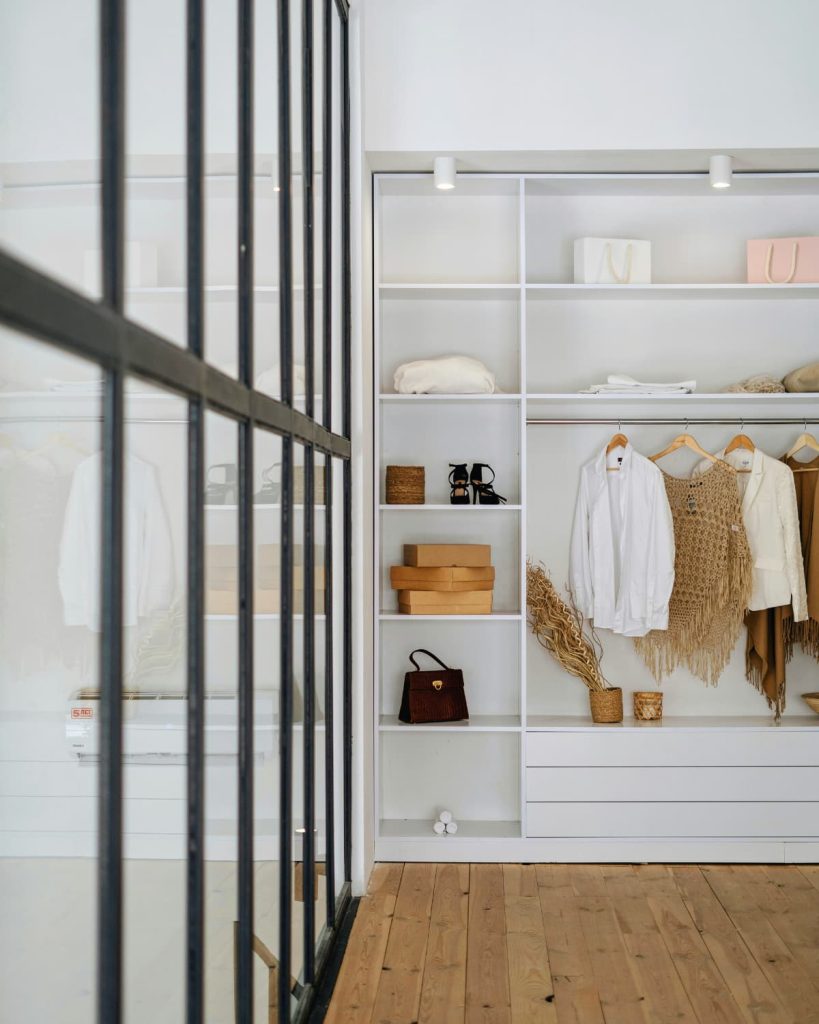
Linen closets fail when shelves are sized for “storage” instead of what people actually store. Oversized shelves hide items; undersized shelves waste vertical space. The result is clutter, collapsing stacks, and towels that never quite fit.
This guide explains standard linen closet dimensions, with a focus on shelf depth, shelf height, and overall closet size that work in real homes, especially apartments and small houses, where linen storage often shares space with cleaning supplies or overflow items.
What Counts as a Linen Closet?
A linen closet is any enclosed storage used for:
- Towels and bedding
- Sheets and pillowcases
- Toiletries and paper goods
- Cleaning supplies (often shared)
It can be:
- A hallway closet
- A bathroom-adjacent cabinet
- A shallow built-in
What matters most is shelf proportion, not its location.
Standard Linen Closet Dimensions (Quick Overview)
Typical functional ranges you’ll see in residential interiors:
| Element | Common Range |
|---|---|
| Closet depth | 12–24 inches |
| Closet width | 18–36 inches (or more) |
| Shelf height (most items) | 10–14 inches |
| Shelf height (bulky items) | 14–18 inches |
Deeper closets are not automatically better; access and visibility matter more than raw volume.
Linen Closet Depth: How Deep Is Too Deep?
Recommended Depths
- 12–16 inches → Ideal for towels, toiletries, paper goods
- 18–24 inches → Acceptable only with structure (bins/dividers)
Depth beyond 16 inches often causes:
- Items to be stored two rows deep
- Forgotten items at the back
- Overbuying and clutter
This is the same usability issue found in pantry design. For a deeper explanation of why depth limits access, see:
[Standard Pantry Shelf Depth: What Fits and What Doesn’t]
Linen Closet Shelf Height (The Real Key)
Towels & Linens
- 10–12 inches → Hand towels, folded linens
- 12–14 inches → Bath towels, folded sheets
Anything taller encourages over-stacking, which leads to unstable piles.
Bulky Items
- 14–18 inches → Extra blankets, comforters, large paper goods
Use taller shelves sparingly to avoid wasted vertical space.
For a clear breakdown of shelf-height logic that translates well to closets, see:
[Standard Closet Shelf Height: What Actually Works for Daily Use]
Shelf Thickness and Usable Space (Often Overlooked)
Shelf thickness reduces usable height. Typical shelves are:
- ¾ inch (common)
- 1 inch or more (heavier-duty)
When planning, always subtract shelf thickness from the vertical spacing to get true usable height. Ignoring this is a common reason shelves feel “too tight” after installation.
Linen Closet Width: What Works Best?
Width affects how many stacks you can store side by side.
- 18–24 inches → Compact, works with one stack per shelf
- 24–36 inches → Most versatile, allows 2–3 stacks
- 36+ inches → Consider bins or dividers to prevent sprawl
Wider shelves without structure often become dumping grounds.
How Many Shelves Does a Linen Closet Need?
A practical rule:
- 4–6 shelves for a standard-height closet
- Majority in the 10–14 inch range
- One taller shelf for bulky items
Too many shelves increase clutter; too few waste vertical space.
Linen Closets That Share Functions (Very Common)
In many homes, linen closets also store:
- Cleaning supplies
- Toiletries
- Overflow household items
When that’s the case:
- Keep cleaning supplies on lower shelves
- Reserve mid-level shelves for towels and linens
- Use the top shelf for low-access items
For organizing mixed-use storage logically, see:
[How to Organize Your Home Effectively: A Thoughtful, Functional Approach That Lasts]
Bins, Dividers, and When to Use Them
Bins and dividers help when:
- Closet depth exceeds 16 inches
- Shelf width exceeds 30 inches
- Multiple categories share the same shelf
Use:
Avoid:
- Tall bins that block visibility
- Opaque bins without labels
Bin sizing should follow the same rules outlined for small closets:
[Best Stackable Storage Bins for Small Closets (What Actually Works)]
Common Linen Closet Dimension Mistakes
Shelves Too Deep
Depth without structure hides items.
All Shelves the Same Height
Different items require different clearances.
Oversized Top Shelves
They become unreachable dumping zones.
Ignoring Door Swing
Doors can block access if shelves are too deep.
For door interaction issues, see:
[Kitchen Cabinet Door Clearance: Minimum Space You Actually Need]
Step-by-Step: Planning a Linen Closet That Works
- List what you store (towels, sheets, supplies)
- Measure folded item height
- Set most shelves at 10–14 inches
- Limit depth to 12–16 inches where possible
- Add one taller shelf for bulky items
- Use bins only where depth requires them
This approach reduces clutter without increasing closet size.
Linen Closets in Apartments & Small Homes
In compact homes:
- Linen closets are often shallow by necessity
- Hallway space is limited
- Shared storage is common
A shallow, well-planned linen closet almost always outperforms a deep, poorly organized one.
This aligns with broader small-space planning principles:
[Best Space Saving Furniture for Small Apartments: Complete 2026 Guide]
Linen Closet Dimension Cheat Sheet
- Ideal depth → 12–16 in
- Max depth without bins → 16 in
- Shelf height (most items) → 10–14 in
- Bulky items → 14–18 in
- Preferred width → 24–36 in
FAQ: Linen Closet Dimensions
Is 12 inches deep enough for towels?
Yes. Most folded towels fit comfortably.
Should linen shelves be adjustable?
Yes, especially in shared-use closets.
Are deeper closets better?
Only when paired with bins or pull-outs.
Final Takeaway
- Linen closets work best when shallow and structured
- 10–14 inches covers most linen needs
- Depth beyond 16 inches requires organization aids
- Good dimensions reduce clutter without adding furniture
Design linen storage around what you actually fold and reach, not maximum capacity.
This post may contain affiliate links. As an Amazon Associate, we earn from qualifying purchases.