Shoe storage fails most often because shelves are built either too deep or too shallow. Too shallow, and shoes hang over the edge. Too deep, and pairs disappear behind one another, turning shelves into cluttered piles.
This guide explains how deep shoe shelves should be, based on real shoe sizes, shelf usability, and access, not showroom aesthetics. It applies to closets, entryways, wardrobes, and apartments, where shoe storage must be efficient and easy to maintain.
What Shoe Shelf Depth Actually Means
Shelf depth is the usable horizontal distance from the front edge of the shelf to the back wall, not the cabinet depth or overall closet depth.
This matters because:
- Shoes have fixed lengths
- Visibility matters more than capacity
- Access determines whether storage stays organized
Just because a closet is deep does not mean shoe shelves should be.
Standard Shoe Shelf Depth (Quick Answer)
For most residential shoe storage, these depths work best:
| Shoe Type | Recommended Shelf Depth |
|---|---|
| Flats, sandals | 10–11 inches |
| Sneakers, casual shoes | 11–12 inches |
| Men’s shoes / larger sizes | 12–14 inches |
| Boots (ankle/short) | 14–16 inches |
| Deep shelves without pull-outs | Avoid over 16 inches |
Depths beyond 16 inches almost always reduce usability unless shelves pull out or use bins.
Why Shoe Shelves Should Be Shallower Than Closets
Closets are often 24 inches deep, but shoes rarely need that much space.
Problems with overly deep shoe shelves:
- Pairs get pushed to the back
- Shoes stack front-to-back
- Dust accumulates
- Shoes are forgotten or mismatched
This is the same usability issue seen in pantries and linen closets, where excessive depth hides items. For a deeper explanation of why depth limits access, see:
[Standard Pantry Shelf Depth: What Fits and What Doesn’t]
Shoe Shelf Depth by Storage Type
1) Everyday Shoes (Sneakers, Loafers, Flats)
Ideal depth: 11–12 inches
This fits:
- Most adult shoe sizes
- Shoes placed toe-forward
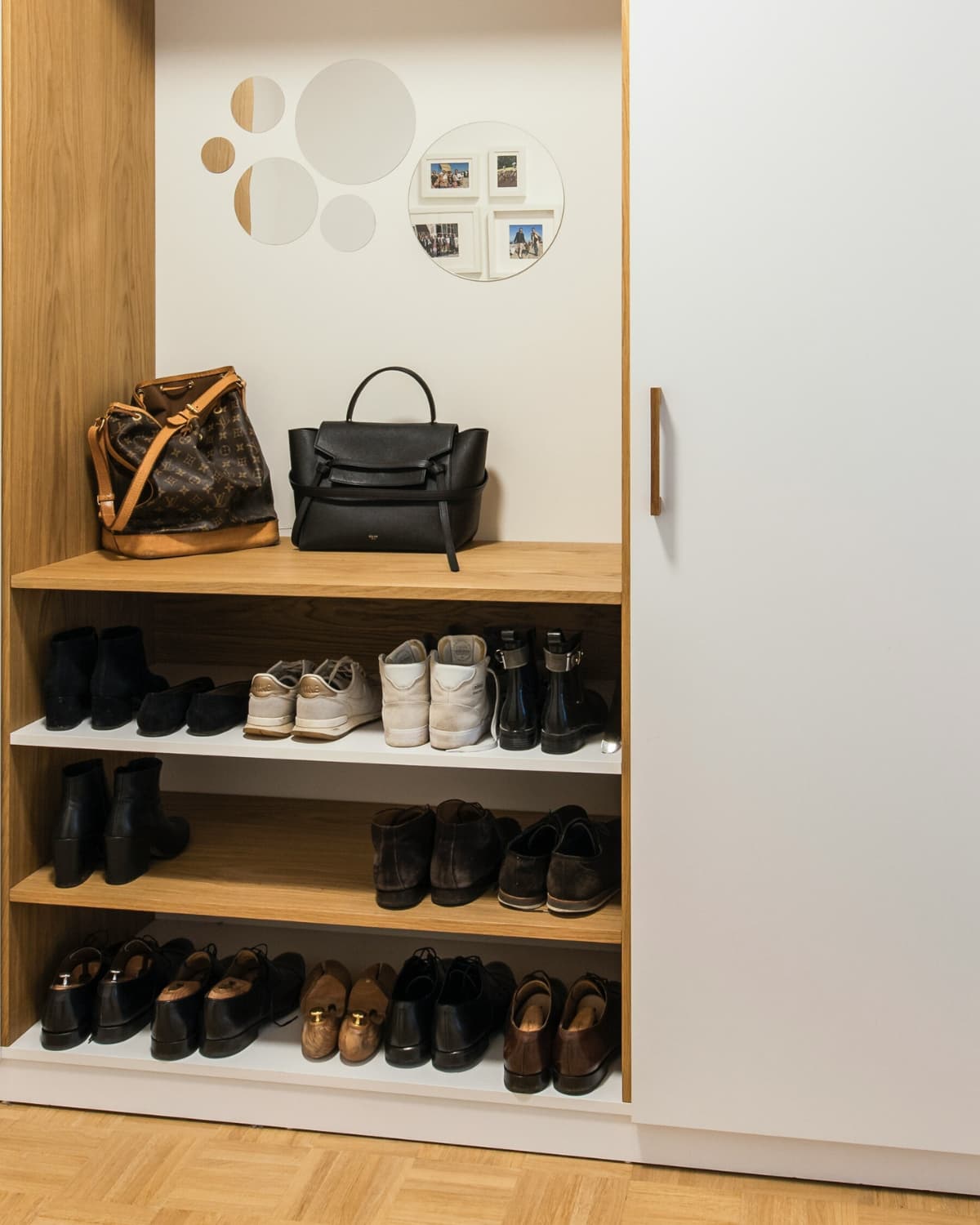
- One row per shelf (best practice)
This depth keeps all shoes visible and easy to grab.
2) Men’s Shoes & Larger Sizes
Ideal depth: 12–14 inches
Men’s shoes and larger sizes often exceed 11 inches in length. The extra clearance prevents overhang without encouraging double rows.
3) Boots and Bulky Footwear
Ideal depth: 14–16 inches
Best for:
- Ankle boots
- Short boots
- Bulky sneakers
Avoid deeper shelves unless boots are stored in bins or shelves pull out.
Shelf Height Matters Too (Often Overlooked)
Depth alone isn’t enough, shelf height affects whether shoes fit comfortably.
Typical shelf heights:
- 7–8 inches → Flats, sandals
- 8–10 inches → Sneakers, casual shoes
- 12–14 inches → Boots
Shelf height logic follows the same principles used in closet shelving:
[Standard Closet Shelf Height: What Actually Works for Daily Use]
Flat Shelves vs Angled Shoe Shelves
Flat Shelves
Pros
- Simple
- Works for all shoe types
- Easy to clean
Cons
- Slightly less visibility
Angled Shelves
Pros
- Improved visibility
- Shoes face forward
Cons
- Reduces usable depth
- Less flexible for boots
Angled shelves often work best in entryways or small shoe-only closets.
Shoe Shelf Depth in Different Areas of the Home
Closets
- Keep shelves 12–14 inches deep
- Avoid double rows
- Combine with adjustable shelves
Entryways
- 10–12 inches is usually enough
- Visibility and quick access matter more than volume
Wardrobes & Cabinets
- Match shelf depth to interior depth
- Use pull-out trays if depth exceeds 16 inches
For small-space planning logic beyond closets, see:
[Best Space Saving Furniture for Small Apartments: Complete 2026 Guide]
How Many Shoes Per Shelf? (Usability Rule)
Best practice:
- 1 row per shelf
- 2–4 pairs per shelf, depending on width
- Avoid stacking shoes vertically
More shoes per shelf increases clutter and reduces daily usability.
Common Shoe Shelf Dimension Mistakes
Making Shelves Too Deep “Just in Case”
Extra depth almost always becomes hidden clutter.
Designing for Maximum Capacity
Shoe storage should prioritize rotation and access, not storage volume.
Ignoring Shelf Height
Boots fail when height isn’t planned.
Using Closet Depth as a Guide
Closet depth ≠ shoe shelf depth.
Avoid common sizing mistakes across your home → The Small Space Fit Kit
Step-by-Step: Planning Shoe Shelf Depth Correctly
- Identify shoe types you own (flats, sneakers, boots)
- Measure the longest shoe
- Add 1–2 inches for clearance
- Choose the shallowest depth that fits
- Avoid shelves deeper than 16 inches unless they pull out
For organizing shoe storage logically with the rest of the home, see:
[How to Organize Your Home Effectively: A Thoughtful, Functional Approach That Lasts]
Still guessing shelf depths in the rest of your space?
The Small Space Fit Kit helps you plan shelves, furniture, and clearances using real measurements, so storage works across closets, entryways, and apartments, not just on paper.
Shoe Shelves in Apartments (Reality Check)
In apartments:
- Closets are often deep but narrow
- Shoes get lost quickly
- Seasonal rotation matters
Shallow, visible shoe shelves outperform deep shelves in almost every scenario.
This aligns with broader small-space design principles:
[Best Space Saving Furniture for Small Apartments: Complete 2026 Guide]
Shoe Shelf Depth Cheat Sheet
- Flats & sandals → 10–11 in
- Sneakers → 11–12 in
- Men’s shoes → 12–14 in
- Boots → 14–16 in
- Max depth without pull-outs → 16 in
FAQ: Shoe Shelf Depth
Is 12 inches deep enough for shoes?
Yes, for most adult shoes.
Are deeper shelves better for boots?
Only up to 16 inches unless using bins or pull-outs.
Should shoe shelves be adjustable?
Yes, especially when storing mixed footwear.
Final Takeaway
- 12–14 inches covers most shoe storage needs
- Deeper shelves reduce visibility and access
- One row per shelf keeps storage usable
- Shoe storage should prioritize access, not volume
Design shoe shelves around how you grab and rotate shoes, not how many pairs you own.
This post may contain affiliate links. As an Amazon Associate, we earn from qualifying purchases.