
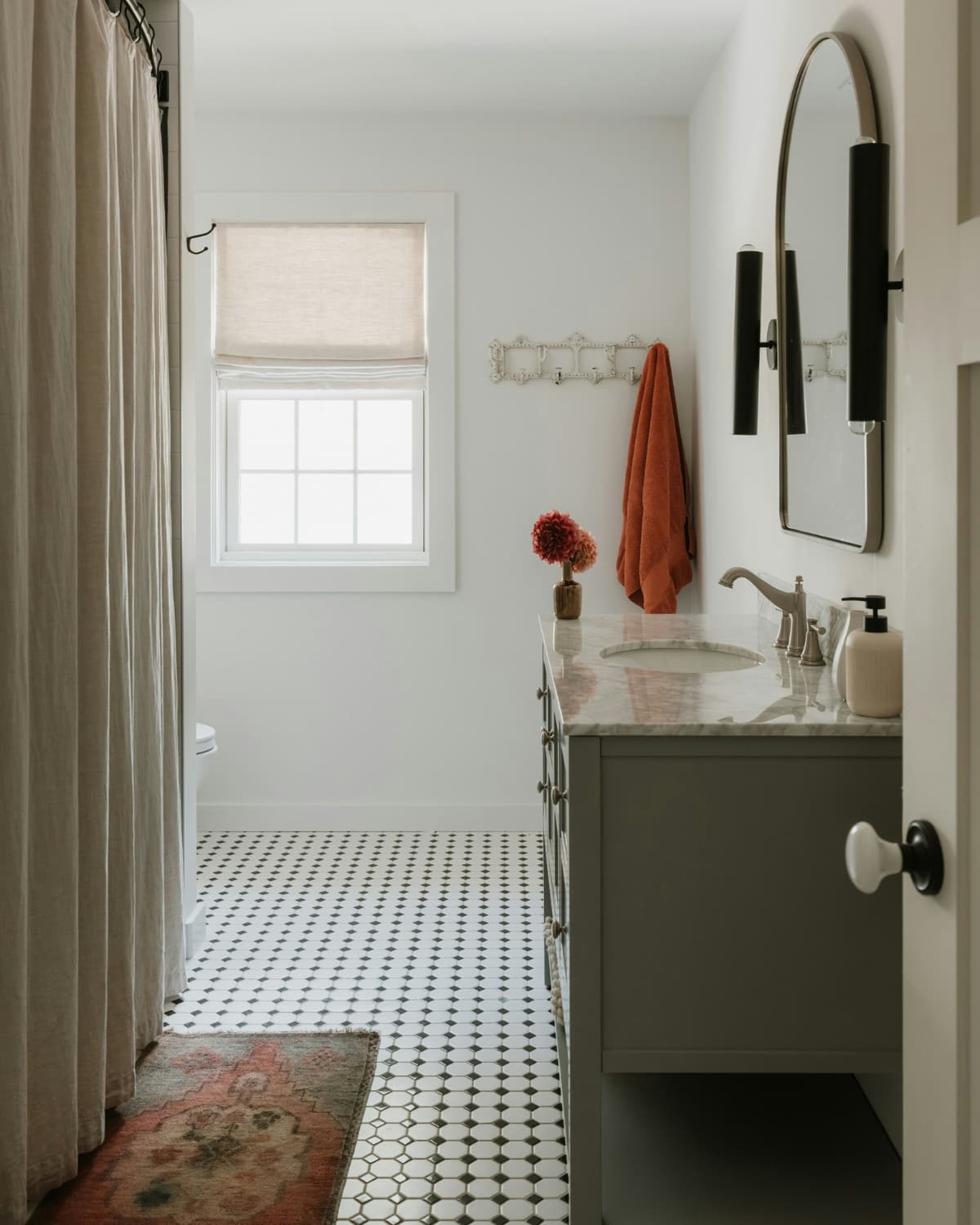
Bathroom vanities are one of the most mis-sized elements in residential design. Many are selected based on appearance alone, without considering depth, height, clearance, and daily use. The result is a bathroom that looks fine but feels cramped, awkward, or uncomfortable.
This guide explains standard bathroom vanity dimensions (including height, depth, and width) and how to choose sizes that actually work in real homes, especially apartments and small bathrooms, where circulation and access matter more than trends.
What “Standard Bathroom Vanity Dimensions” Actually Means
There is no building code that mandates exact vanity dimensions for residential bathrooms.
“Standard” refers to commonly used, functional ranges that:
- Fit average human ergonomics
- Allow comfortable sink use
- Maintain safe circulation space
- Work with standard plumbing layouts
Good vanity dimensions balance use, movement, and proportion, not maximum size.
Quick Reference: Common Bathroom Vanity Dimensions
| Dimension | Typical Functional Range |
|---|---|
| Vanity height | 32–36 inches |
| Vanity depth | 18–22 inches |
| Single vanity width | 24–48 inches |
| Double vanity width | 60–72 inches |
| Minimum front clearance | 30–36 inches |
These ranges cover most residential bathrooms without compromising usability.
Bathroom Vanity Height: Comfort Comes First
Standard Heights
- 32–34 inches → Traditional vanities
- 34–36 inches → Comfort height (most common today)
Why height matters:
- Too low → uncomfortable bending
- Too high → awkward sink use
Most adults find 34–36 inches comfortable for daily use.
Height vs Sink Type (Important)
Vanity height must account for the sink style:
- Undermount sinks → height stays within range
- Drop-in sinks → add ~1 inch
- Vessel sinks → require lower cabinet height
Vessel sinks often require cabinets closer to 30–32 inches to keep the total height usable.
Bathroom Vanity Depth: Where Most Mistakes Happen
Standard Depth Range
- 18–20 inches → Ideal for small bathrooms
- 20–22 inches → Standard bathrooms
- Over 22 inches → Often problematic
Depth affects circulation, not storage capacity.
Vanities that are too deep:
- Block walkways
- Make bathrooms feel smaller
- Reduce usable floor space
Depth planning follows the same usability logic as other storage zones, such as pantries:
[Standard Pantry Shelf Depth: What Fits and What Doesn’t]
Bathroom Vanity Width: One Size Does Not Fit All
Single Vanities
- 24–30 inches → Powder rooms, small bathrooms
- 36–48 inches → Standard full bathrooms
Double Vanities
- 60–72 inches → Comfortable minimum
- Less than 60 inches → often cramped
Width should reflect:
- Number of users
- Sink spacing
- Available wall space
Oversized vanities overwhelm small rooms without adding function.
Clearance in Front of the Vanity (Non-Negotiable)
Minimum front clearance: 30 inches
Comfortable clearance: 36 inches
This space allows:
- Standing comfortably
- Opening drawers and doors
- Safe movement in shared bathrooms
Clearance planning follows the same access logic as cabinet movement in kitchens:
[Kitchen Cabinet Door Clearance: Minimum Space You Actually Need]
Sink Spacing in Double Vanities
For double vanities:
- 30–36 inches per user is a realistic planning range
- Sink centers are usually 30–36 inches apart
Less spacing increases conflict and reduces usability.
Storage vs Circulation: The Trade-Off
Larger vanities promise more storage but often:
- Reduce floor space
- Block door swing
- Interfere with toilet clearance
In many bathrooms, shallower vanities with better internal organization outperform deeper ones.
For general organization logic beyond size alone, see:
[How to Organize Your Home Effectively: A Thoughtful, Functional Approach That Lasts]
Vanity Drawers, Doors, and Depth Coordination
Deep vanities with drawers require careful planning:
- Drawers must clear plumbing
- Doors should not block circulation
- Drawer depth should remain usable
Drawer usability follows the same principles outlined here:
[Standard Drawer Depth for Kitchen Cabinets (With Practical Examples)]
Bathroom Vanity Dimensions in Small Homes & Apartments
In apartments:
- Bathrooms are often narrow
- Circulation space is limited
- Wall depth matters more than storage volume
Best practices:
- Choose 18–20 inch deep vanities
- Prioritize drawers over cabinets
- Avoid oversized double vanities
This aligns with broader small-space planning principles:
[Best Space Saving Furniture for Small Apartments: Complete 2026 Guide]
Common Bathroom Vanity Dimension Mistakes
Choosing the Deepest Vanity Available
Depth reduces circulation faster than it adds storage.
Ignoring Door and Drawer Swing
Vanity doors must open without blocking toilets or walkways.
Designing Around Looks, Not Use
Daily comfort matters more than style trends.
Oversizing Double Vanities
Two sinks don’t always equal better usability.
Avoid common sizing mistakes with a measurement-first planning system → The Small Space Fit Kit
Step-by-Step: Choosing the Right Vanity Dimensions
- Measure bathroom width and depth
- Confirm minimum 30–36 inches front clearance
- Choose the shallowest depth that fits plumbing
- Select height based on sink type
- Size width to the number of users
- Prioritize internal organization
Still unsure which vanity size works in your bathroom?
The Small Space Fit Kit helps you calculate layouts, clearances, and furniture dimensions based on your actual room, so you avoid costly sizing mistakes before buying or renovating.
Bathroom Vanity Dimension Cheat Sheet
- Height → 34–36 in (most users)
- Depth → 18–22 in
- Single vanity width → 24–48 in
- Double vanity width → 60–72 in
- Front clearance → 30–36 in
FAQ: Bathroom Vanity Dimensions
Is 18 inches deep enough for a vanity?
Yes, especially in small bathrooms.
Are comfort-height vanities better?
For most adults, yes.
Do deeper vanities add useful storage?
Rarely. Organization matters more than depth.
Final Takeaway
- Bathroom vanities should be sized for movement and comfort, not just storage
- 18–22 inches deep works in most homes
- 34–36 inches high suits most adults
- Clearance matters as much as size
A well-sized vanity makes a bathroom feel larger, calmer, and easier to use, without changing the footprint.
This post may contain affiliate links. As an Amazon Associate, we earn from qualifying purchases.