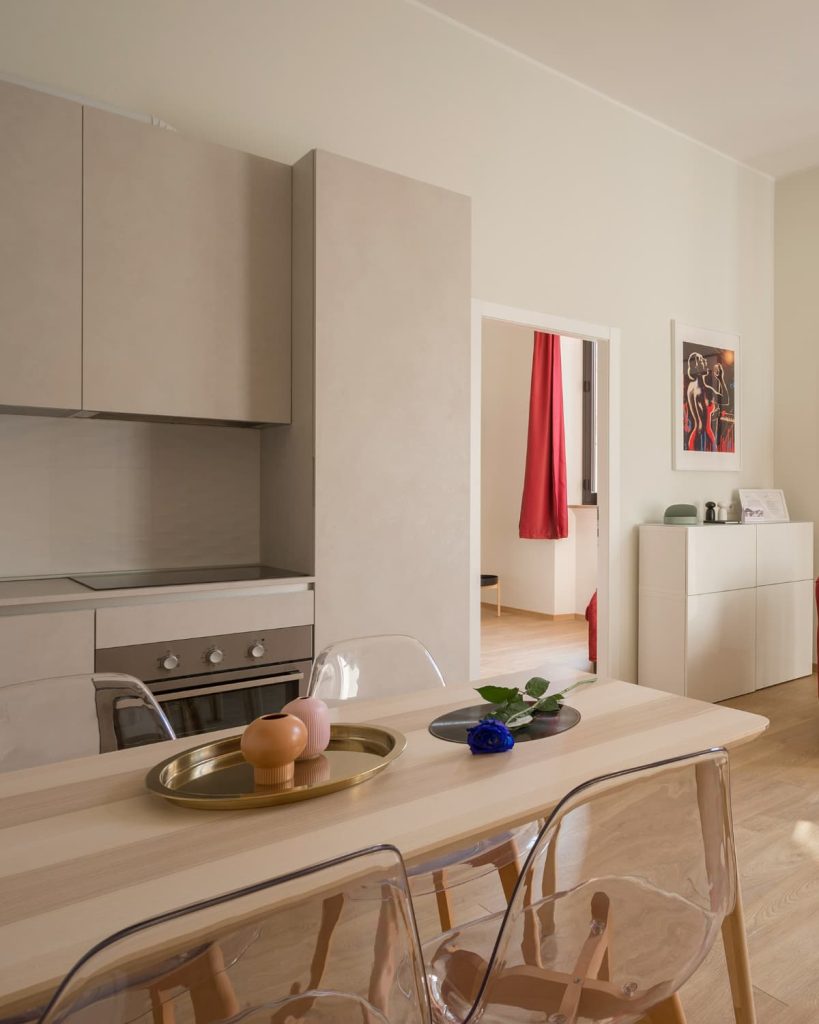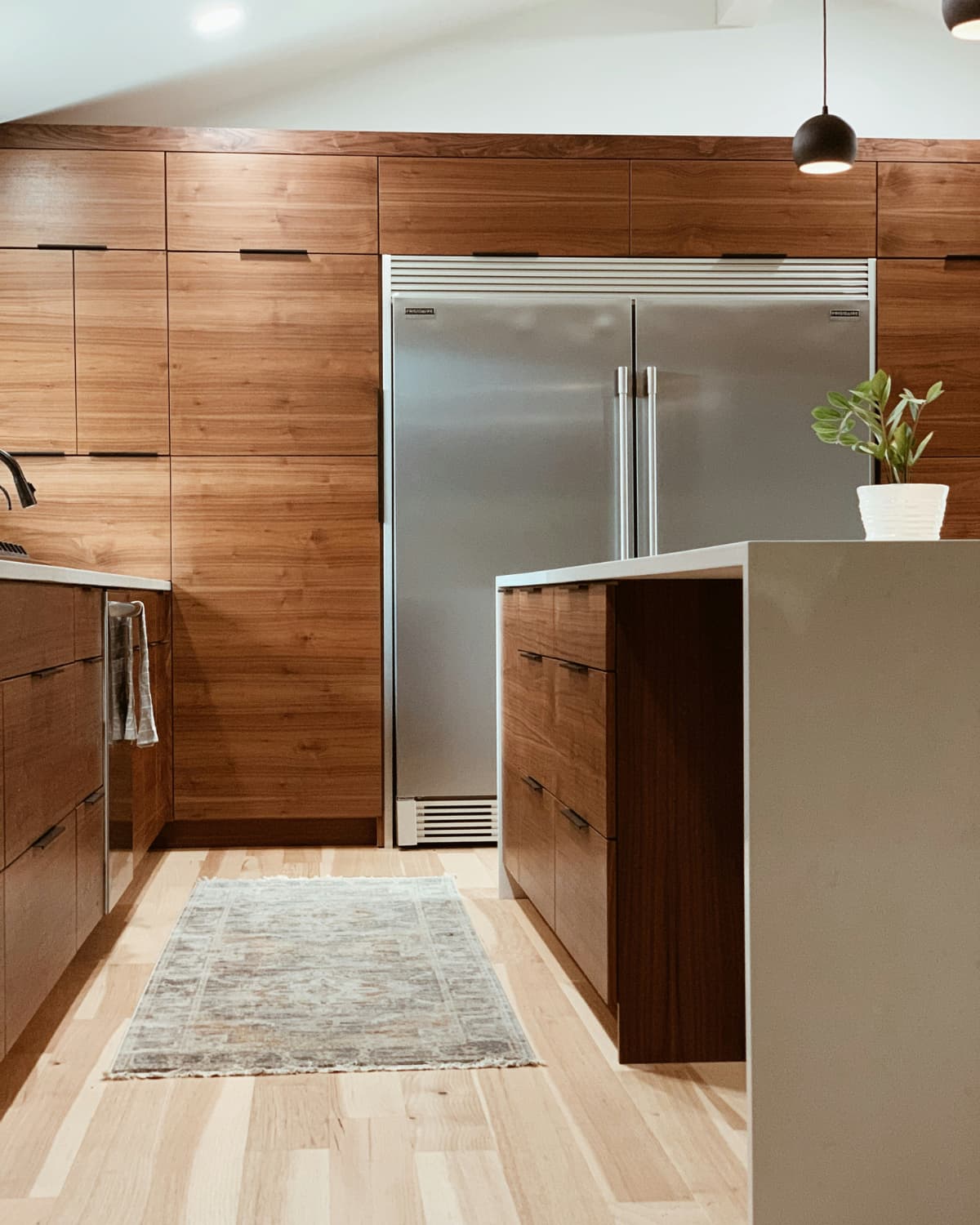
If you’re searching kitchen island size for small kitchen clearance, you already know the core problem: the island looks great online, but in a real apartment kitchen it can destroy circulation, block cabinet doors, and turn cooking into a constant sidestep. In small kitchens, the island isn’t “extra.” It becomes part of the working pathway, so the clearances matter more than the island itself.
This guide gives you a fit-first method: the aisle widths that keep a small kitchen functional, how to choose island dimensions that match your layout (galley, L-shape, or one-wall), and the exact checks that prevent the most common small-apartment mistakes.
This post may contain affiliate links. As an Amazon Associate, we earn from qualifying purchases.
Kitchen Island Size for Small Kitchen Clearance: Quick Answer
A small kitchen island works when your clear walking and working aisles stay functional after the island is in place. For most apartment kitchens, that means:
- Minimum workable clearance (tight): about 36 inches of clear aisle
- More comfortable cooking clearance: about 42 inches clear aisle (especially if two people use the kitchen)
- If seating is involved: you need extra clearance behind stools so people can sit without blocking the path
These numbers are not about perfection. They’re about whether you can open drawers, step back from the stove, pass behind someone, and unload the dishwasher without constant friction. If you want a deeper understanding of why clearance beats “storage capacity” in small layouts, the logic in [NEUFERT BASIC DIMENSIONS FOR RESIDENTIAL DESIGN A HUMAN CENTERED VERIFIED GUIDE] is a useful reference for how real human movement shapes space planning.
Step 1: Measure the Usable Aisle, Not the Room Width
The biggest mistake with kitchen island size for small kitchen clearance is measuring the kitchen’s overall width and assuming an island will fit. What matters is usable aisle width, after you subtract everything that already occupies space.
How to measure correctly
- Identify where the island would sit.
- Measure the clear distance from the island edge to the front edge of base cabinets or appliances on each side.
- Do this at the tightest point (often near the fridge or dishwasher).
Hidden clearance thieves to subtract
- Cabinet handles and appliance handles that protrude
- Overhanging countertops (including island overhang)
- Open door and drawer swing zones
- A trash can “parking spot” that lives in the aisle
Aisle width that looks fine on paper can fail in daily life once doors open. If you want a clear mental model of door swing zones (and how they silently break usability), see [KITCHEN CABINET DOOR CLEARANCE MINIMUM SPACE YOU ACTUALLY NEED].
Step 2: Choose the Right Island Type for Your Layout
Your best kitchen island size for small kitchen clearance depends heavily on your kitchen layout. The same island can work beautifully in an L-shape and fail completely in a tight galley.
Galley kitchens (two parallel runs)
Galley kitchens are the most clearance-sensitive. If you place an island in the middle, you create two aisles, and both must remain usable.
What usually works better than a true island:
- A rolling island or slim cart you can move out of the way
- A butcher block table used as prep space (with careful aisle measurement)
- A wall-mounted drop-leaf surface (if you can install it)
If you’re determined to put something in the center, prioritize aisle clearance first, even if it means a narrower island.
L-shaped kitchens
L-shapes often handle a small island better because circulation can route around the open side. Your island can sometimes be slightly deeper without blocking movement, if the aisles remain clear.
In L-shapes, the common failure is placing an island too close to:
- the fridge (blocking door swing)
- the dishwasher (blocking loading)
- a corner cabinet (blocking access)
One-wall kitchens
Most one-wall kitchens don’t support a permanent island unless the room is wide enough to keep a clear aisle. In many apartments, a rolling prep island or narrow console-style table is the only realistic option.
If your kitchen storage is the real problem (not prep space), you may get more value from organizers and internal storage improvements than from adding an island footprint. [BEST KITCHEN ORGANIZERS FOR SMALL APARTMENTS WHAT ACTUALLY WORKS] is often the more practical path when the kitchen can’t spare an aisle.
Step 3: Island Dimensions That Work in Small Kitchens
When people ask kitchen island size for small kitchen clearance, they often want a single “best size.” In reality, the best size is the biggest island that still preserves functional aisles.
Typical small-kitchen-friendly island dimensions
- Length: roughly 30–48 inches is a common workable range in small kitchens
- Depth (front-to-back): roughly 18–24 inches for slim islands; 24–30 inches can work if aisles stay clear
- Height: typically matches counter height for comfortable prep
Instead of aiming for a “standard island,” aim for:
- the minimum depth that solves your problem (prep surface, storage, seating, or all three)
- the maximum length that doesn’t block appliance access
The “one purpose” rule
In a small apartment, islands fail when they try to do everything:
- big storage
- full seating
- oversized surface
- decorative bulk
Pick the primary purpose:
- Prep surface: prioritize depth and stable top
- Storage: prioritize usable internal storage without increasing depth too much
- Seating: prioritize clearance behind stools and realistic leg room
If your kitchen is missing pantry capacity, a bulky island is often an inefficient fix compared to solving shelf depth and storage zones. For pantry planning that avoids wasted space, see [STANDARD PANTRY SHELF DEPTH WHAT FITS AND WHAT DOES NOT].
Clearance Rules That Decide Whether the Island Is Actually Usable
This is the core of kitchen island size for small kitchen clearance: the island is only “right” if the space around it works when the kitchen is in motion.
1) Work aisle clearance (the cooking aisle)
A practical baseline is:
- 36 inches clear for a tight but usable aisle
- 42 inches clear for more comfortable work flow
If two people cook or pass through regularly, the more comfortable clearance becomes more important.
2) Appliance door and dishwasher clearance
Dishwashers and ovens need room not just to open, but for you to stand and load. If the island blocks that stance area, you’ll hate it quickly.
A simple test:
- Tape the island footprint on the floor (painter’s tape).
- Open the dishwasher.
- Stand where you would load it.
- If your body is forced sideways or you can’t step back, the island is too close.
3) Cabinet and drawer access
This is where islands create constant friction: drawers that can’t fully open, corner cabinets that become unusable, trash pull-outs that hit.
If you want a practical way to think about drawer depth and how it affects access zones, [STANDARD DRAWER DEPTH FOR KITCHEN CABINETS WITH PRACTICAL EXAMPLES] pairs well with island planning.
Seating Changes Everything: The Clearance People Forget
Many readers want an island with stools. That’s where kitchen island size for small kitchen clearance most commonly fails, because seating turns a working aisle into a blocked path.
How much space does each stool really need?
Plan for:
- Stool width: many stools take roughly 16–20 inches of width each, but you must verify the actual stool size you choose
- Elbow room: people need space between seats to sit comfortably
A practical planning mindset:
- Don’t cram “extra seating” if it forces every meal into bumping elbows.
- In a small kitchen, two comfortable seats usually beats three cramped ones.
Clearance behind stools
If stools are used daily, you need room behind them so someone can sit without blocking the main path.
Reality check:
- If the only way to sit is to block the fridge or the main walkway, seating is not a functional feature—it’s décor.
Validate Your Island Fit Before You Buy Anything Heavy
An island is one of the hardest small-apartment purchases to “undo.” It’s heavy, it changes circulation, and returns are a headache. If you want a repeatable way to validate kitchen island size for small kitchen clearance (and other tight-space decisions) before ordering, use a measurement-led fit check.
The Small-Space Fit Kit is designed for exactly this: clear steps to measure your aisles, account for door swings, test footprints, and avoid “almost works” furniture that quietly breaks the room.
How to Test an Island in Your Kitchen (Before You Commit)
You can solve most island mistakes with a simple, physical test.
1) Tape the footprint
Use painter’s tape to mark the island’s:
- length
- depth
- any countertop overhang
Then live with it for a day:
- unload the dishwasher
- cook one meal
- open the fridge repeatedly
- carry groceries through the kitchen
If it feels annoying during a fake test, it will feel worse when it’s real.
2) Run the “two-people test”
Have one person stand at the counter (as if prepping) while another passes behind. If passing requires turning sideways or waiting every time, the clearance is too tight for how you live.
3) Confirm overhead clearance too
If you plan pendant lighting above an island, check:
- head clearance
- visual clutter (too many hanging elements can make a small kitchen feel lower and tighter)
When an Island Is the Wrong Answer (And What to Do Instead)
Sometimes the best kitchen island size for small kitchen clearance is… no island.
Choose an alternative when:
- your usable aisle would drop below workable clearance
- your dishwasher/fridge becomes awkward to use
- seating blocks your main path
Better small-apartment alternatives:
- Rolling island you can park against a wall
- Narrow prep cart that adds surface without adding depth
- Over-the-sink cutting board to add prep space without footprint
- Wall-mounted drop-leaf (if your rental setup allows it)
If your real pain point is lack of vertical storage or bad shelf spacing, improving cabinet and shelf organization can outperform adding an island. For shelf spacing logic in compact kitchens, [HOW MANY INCHES BETWEEN KITCHEN SHELVES STANDARD SPACING GUIDE] is a strong companion to island planning.
And if your island idea is really about “I need more counter clearance for appliances,” make sure you’re not stacking problems vertically. This guide helps plan that zone: [HOW MUCH SPACE DO YOU NEED BETWEEN COUNTERTOP AND UPPER CABINETS].
FAQ
1) What is the minimum clearance around an island in a small kitchen?
A commonly workable minimum is about 36 inches of clear aisle, but comfort often improves around 42 inches, especially with frequent pass-through.
2) Can I put an island in a galley kitchen?
Sometimes, but it’s the most clearance-sensitive layout. Rolling islands or slim movable prep carts are often more realistic than a fixed island.
3) How do I choose kitchen island size for small kitchen clearance if I want seating?
Start with aisle clearance behind stools. If seated people block the main path or the fridge, seating isn’t functional in that layout.
4) What island depth works best in small kitchens?
Slim depths (often around 18–24 inches) tend to fit better in tight kitchens. Deeper islands can work only if aisle clearance remains functional.
5) How do I test if an island will block my dishwasher or drawers?
Tape the island footprint, open the dishwasher fully, and stand where you load it. Also open adjacent drawers fully. If you can’t stand comfortably, it’s too tight.
6) Is a rolling island a good substitute for a built-in island?
Yes, in many apartments it’s the best compromise: you gain prep space and storage without permanently stealing aisle width.
7) What if my kitchen layout is complicated and I’m not sure what works?
If your kitchen has multiple constraints (tight aisles, multiple doors, weird corners), a fit-first measurement plan is the fastest way to avoid expensive mistakes.
Final Thoughts
The best kitchen island size for small kitchen clearance is the one that preserves how your kitchen actually works: usable aisles, appliance access, and comfortable movement. Start by measuring the true clear aisles (not room width), choose the island type that matches your layout, and test the footprint on the floor before you buy. In small apartments, the right island is rarely the biggest one, it’s the one that improves prep and storage without breaking circulation.