
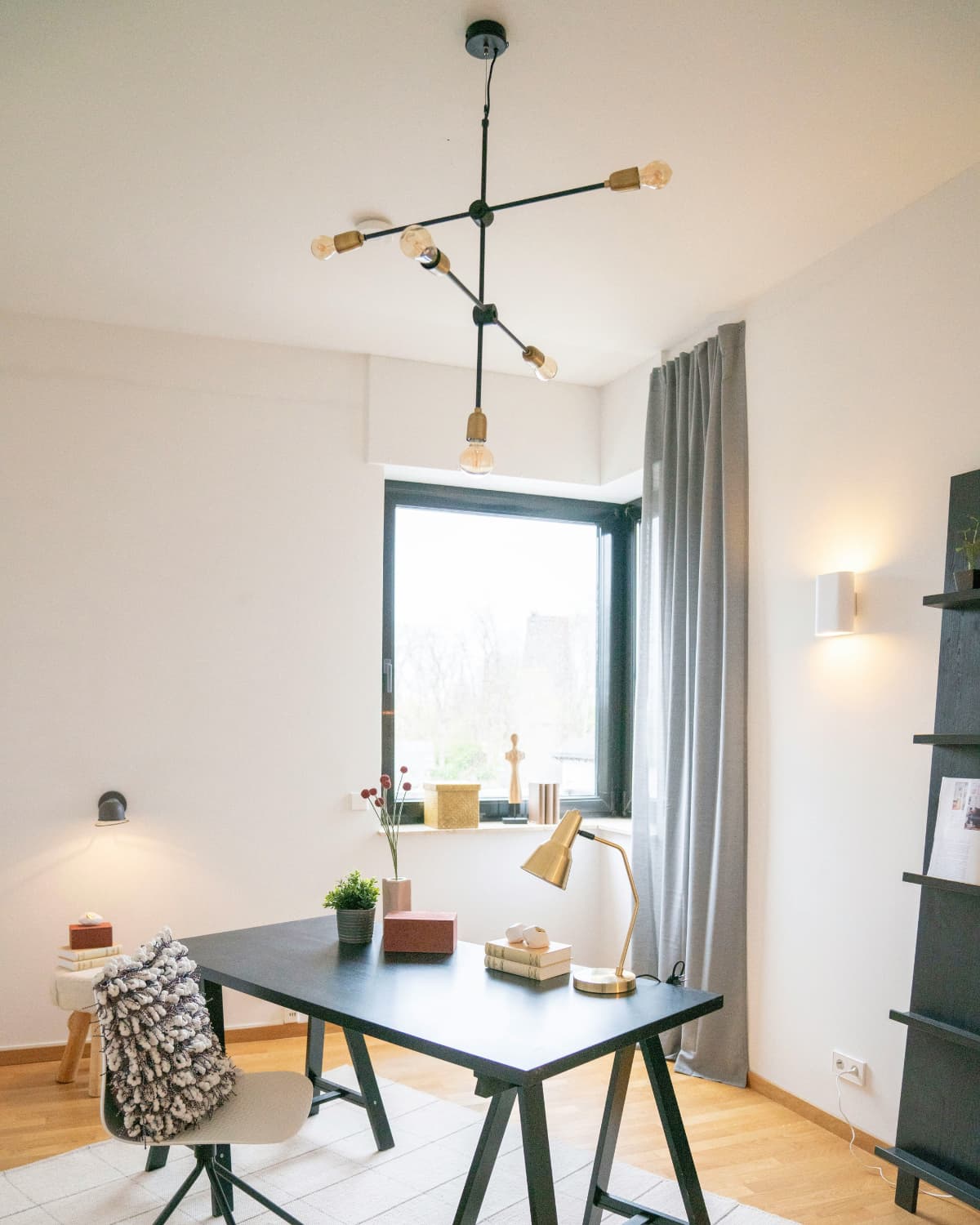
Ceiling height is one of the most misunderstood dimensions in residential design. It’s often discussed in terms of luxury or aesthetics, but in practice, ceiling height affects light, proportion, comfort, storage, and long-term usability far more than style.
This guide explains standard ceiling height in residential spaces, how different heights function in real homes and apartments, and how to make informed decisions when you can’t change the structure.
This post may contain affiliate links. As an Amazon Associate, we earn from qualifying purchases.
What “Standard Ceiling Height” Really Means
There is no single universal ceiling height that applies to all homes.
“Standard” refers to commonly built, functional ranges that balance:
- Human scale and comfort
- Structural efficiency
- Heating and cooling performance
- Furniture and storage compatibility
Good ceiling height is about proportion, not just maximum height.
Quick Reference: Common Residential Ceiling Heights
| Ceiling Height | Typical Use |
|---|---|
| 8 ft (96 in) | Older homes, apartments |
| 8½–9 ft (102–108 in) | Modern standard |
| 9–10 ft (108–120 in) | New builds, main living areas |
| 10+ ft | Select spaces, architectural emphasis |
Most homes today fall between 8½ and 9 feet.
8-Foot Ceilings: Still Functional, Often Misjudged
8-foot ceilings are common in:
- Older homes
- Apartments
- Renovated buildings
They work well when:
- Furniture is appropriately scaled
- Storage doesn’t push too high
- Visual clutter is minimized
Problems arise when tall cabinets, oversized light fixtures, or bulky storage are introduced without adjusting proportions.
Storage planning in 8-foot ceilings benefits from disciplined shelf spacing:
[Standard Closet Shelf Height: What Actually Works for Daily Use]
9-Foot Ceilings: The Modern Sweet Spot
9-foot ceilings have become the most common “comfortable standard” in newer homes.
They allow:
- Better daylight distribution
- Taller windows
- Upper cabinets that don’t feel oppressive
- Improved air circulation
This height balances openness without increasing heating and cooling costs excessively.
Ceiling Height and Storage Planning (Critical Connection)
Ceiling height directly affects:
- Cabinet height
- Shelf spacing
- Closet usability
Higher ceilings don’t automatically mean better storage. Poor planning wastes vertical space.
For example:
- Overly tall shelves reduce reachability
- Excessive top storage becomes dead space
This same logic applies to deep storage elsewhere:
[Standard Pantry Shelf Depth: What Fits and What Doesn’t]
Ceiling Height vs Room Function
Living Rooms
- Benefit most from added height
- 9–10 ft feels open without echo or inefficiency
Bedrooms
- Comfort matters more than drama
- 8½–9 ft is usually ideal
Kitchens
- Height must coordinate with cabinet dimensions
- Too much height above cabinets becomes unused space
For kitchen planning, see:
[How Many Inches Between Kitchen Shelves? Standard Spacing Explained]
Ceiling Height and Light Fixtures
Fixtures must be scaled to ceiling height.
General guidance:
- Low ceilings → flush or semi-flush fixtures
- Higher ceilings → pendants or chandeliers (with control)
Oversized fixtures in low ceilings reduce usable space and visual comfort.
Ceiling Height and Circulation
Ceiling height affects how circulation spaces feel.
Low ceilings combined with narrow circulation amplify constraint.
Balanced proportions reduce that effect.
Apartments and Ceiling Height Reality
In apartments:
- Ceiling height is usually fixed
- Renovation options are limited
Best strategies:
- Use lower-profile furniture
- Avoid tall upper storage unless necessary
- Keep visual lines clean
Small-space planning benefits from treating height as a design constraint, not a limitation:
[Best Space Saving Furniture for Small Apartments: Complete 2026 Guide]
Common Ceiling Height Mistakes
Assuming Taller Is Always Better
Very high ceilings can feel cold, echo-prone, and inefficient.
Ignoring Furniture Scale
Tall ceilings with bulky furniture still feel heavy.
Overusing Vertical Storage
Storage beyond comfortable reach reduces usability.
Mismatched Proportions
Low ceilings + tall cabinets = cramped feeling.
Avoid proportion and storage mistakes with a measurement-based planning system → The Small Space Fit Kit
Working With Existing Ceiling Heights
If you can’t change ceiling height:
- Emphasize horizontal lines
- Keep upper storage intentional
- Avoid visual clutter near the ceiling
- Use lighting to distribute brightness evenly
These strategies improve comfort without structural changes.
Not sure how ceiling height affects storage, furniture, and layout in your home?
The Small Space Fit Kit helps you plan furniture, shelving, and clearances based on your actual room dimensions, so your space feels balanced and usable, even when the ceiling height is fixed.
Ceiling Height and Human Scale
Ceiling height works best when it supports how people move, reach, and live.
Design standards often reference human proportions for a reason, so understanding scale helps avoid overbuilding or under-utilizing space. For more details read: [Neufert Basic Dimensions for Residential Design: A Human-Centered, Verified Guide]
Ceiling Height Cheat Sheet
- Older apartments → ~8 ft
- Modern standard → 8½–9 ft
- Open living areas → 9–10 ft
- Storage planning → prioritize reach, not height
- Proportion > maximum height
FAQ: Standard Ceiling Height
Is 8 feet too low?
No. It works well with proper furniture and storage planning.
Do higher ceilings increase home value?
Sometimes, but proportion and usability matter more.
Should all rooms have the same ceiling height?
Not necessarily. Function should guide height.
Final Takeaway
- Ceiling height shapes how a home feels and functions
- 8½–9 feet works well for most homes
- Higher ceilings require thoughtful storage and lighting
- Comfort comes from proportion, not extremes
A well-planned ceiling height disappears into daily life, which is exactly the goal.