Interior doors are one of the most underestimated design decisions in a home. When door widths are too narrow, everyday movement feels awkward, furniture becomes hard to move, and accessibility suffers. When doors are oversized, valuable wall space is lost, especially in small homes.
This guide explains standard interior door width, how different widths affect daily use, and how to choose dimensions that actually work in real homes and apartments, not just on floor plans.
What “Standard Interior Door Width” Really Means
There is no single residential code-mandated door width for all interior doors.
“Standard” refers to commonly used, functional ranges that balance:
- Human movement and comfort
- Furniture transport
- Accessibility and aging-in-place considerations
- Efficient wall and room layout
Good door width planning prioritizes movement and flexibility, not minimum compliance.
Standard Interior Door Widths (Quick Reference)
| Door Location | Common Width Range |
|---|---|
| Closets / secondary rooms | 24–28 inches |
| Bedrooms / offices | 28–32 inches |
| Bathrooms | 28–32 inches |
| Primary circulation doors | 32–36 inches |
Widths below 28 inches are increasingly impractical for modern use.
Why Door Width Matters More Than You Think
Interior doors are used:
- Multiple times a day
- While carrying items
- When moving furniture
- During emergencies
Narrow doors cause:
- Shoulder and hip contact
- Difficulty moving furniture
- Accessibility issues
- Homes that feel cramped even when rooms are adequate
Door width strongly affects how spacious a home feels, not just how it functions.
28 Inches vs 30 vs 32 Inches (Real-World Differences)
28 Inches
- Common in older homes
- Works for closets and secondary spaces
- Tight for furniture and daily movement
30 Inches
- Practical minimum for bedrooms and bathrooms
- Allows easier movement
- Better for modern living
32 Inches
- Most versatile interior door width
- Works well for furniture, strollers, and accessibility
- Strongly recommended where space allows
If you’re choosing only one width for consistency, 32 inches is the safest choice.
Interior Door Width and Hallway Interaction
Door width directly affects hallway usability.
For example:
- A 32-inch door opening into a 36-inch hallway can block most of the passage when open.
- Wider hallways tolerate wider doors more comfortably.
For circulation planning logic, see:
[Standard Hallway Width: What Actually Works in Homes]
Door and hallway dimensions should always be planned together, not separately.
Door Width and Furniture Movement
Furniture transport is where poor door sizing becomes obvious.
Items that struggle with narrow doors:
- Mattresses
- Sofas
- Wardrobes
- Appliances
Doors under 30 inches often require tilting, rotating, or even removal during moves.
This is why modern homes increasingly favor 30–32 inch interior doors.
Interior Door Width in Apartments
Apartments face tighter constraints:
- Limited wall length
- Narrow hallways
- Smaller rooms
Best practices:
- 30 inches minimum for bedrooms
- 32 inches where circulation allows
- Avoid oversized doors that steal wall space
These choices align with broader small-space design logic:
[Best Space Saving Furniture for Small Apartments: Complete 2026 Guide]
Door Width vs Door Type
Hinged Doors
- Require clearance to swing
- Wider doors need more clearance space
Clearance logic mirrors cabinet planning principles:
[Kitchen Cabinet Door Clearance: Minimum Space You Actually Need]
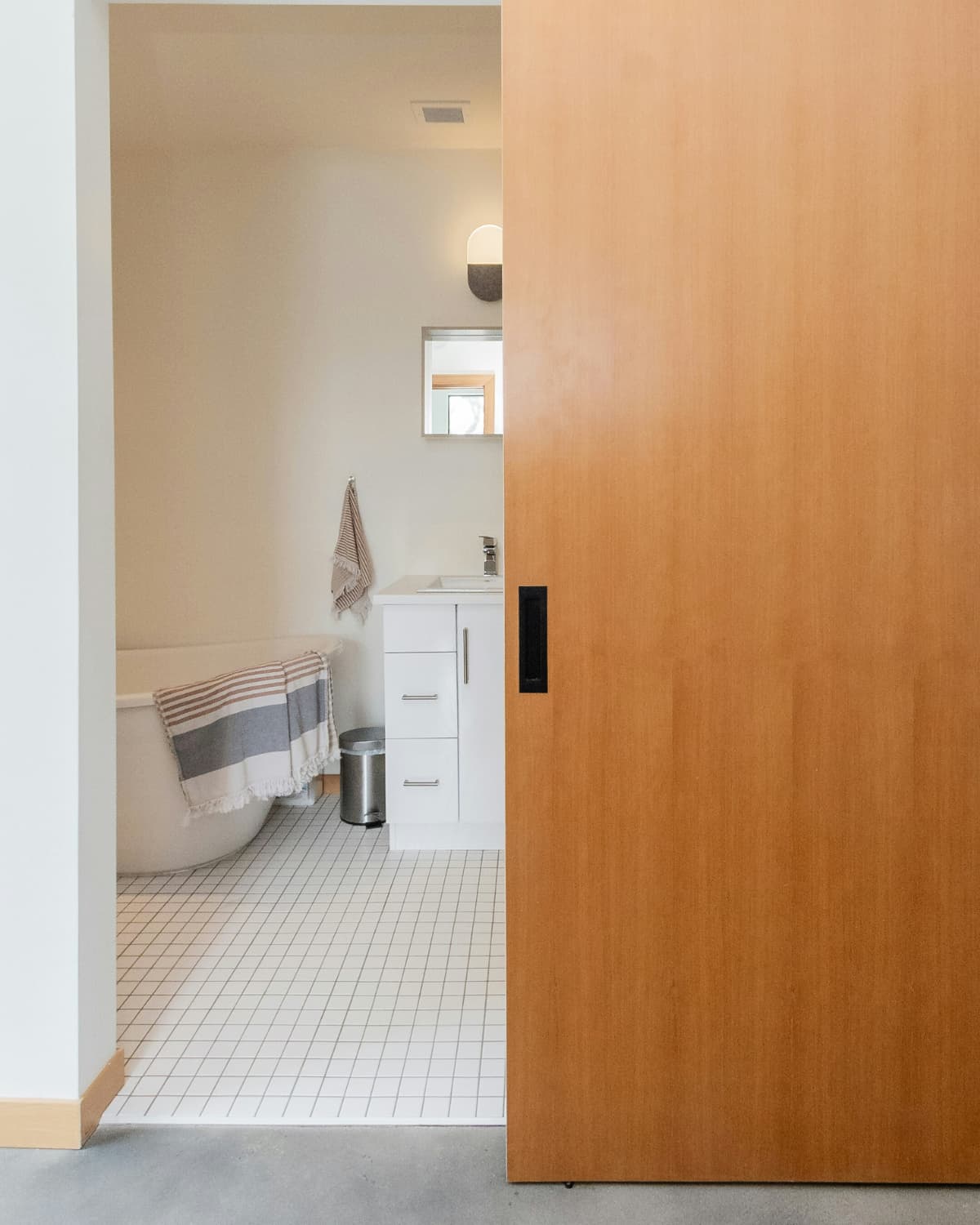
Sliding / Pocket Doors
- Reduce swing clearance
- Allow wider openings in tight spaces
- Ideal for bathrooms, closets, and small rooms (affiliate opportunity)
Pocket doors often make 32–36 inch openings possible where hinged doors would not.
Accessibility Considerations (Future-Proofing)
While not mandatory in all homes, wider doors:
- Improve accessibility
- Support aging-in-place
- Increase long-term usability
Common accessibility benchmarks:
- 32 inches clear opening (often cited)
Choosing 32-inch doors where possible is a low-cost way to future-proof a home.
Common Interior Door Width Mistakes
Designing to the Smallest Possible Width
Minimum widths reduce flexibility over time.
Inconsistent Door Sizes
Random widths make homes feel disjointed.
Ignoring Door Swing
Wide doors need adequate clearance.
Oversizing in Small Rooms
Too-wide doors steal valuable wall space.
Avoid clearance and circulation mistakes with a measurement-based planning system → The Small Space Fit Kit
Step-by-Step: Choosing the Right Interior Door Width
- Identify room function (closet, bedroom, bath)
- Consider furniture movement needs
- Check hallway width and door swing
- Choose 30–32 inches where possible
- Use sliding doors when swing space is limited
Unsure how door widths, hallways, and furniture fit together in your home?
The Small Space Fit Kit helps you plan clearances, door openings, and furniture layouts using real measurements, so movement feels easy, even in apartments and tight spaces.
Interior Door Width Cheat Sheet
- Closets → 24–28 in
- Bedrooms / bathrooms → 28–32 in
- Best all-around choice → 32 in
- Narrow hallways → avoid oversized swing doors
- Future-proofing → favor wider openings
FAQ: Standard Interior Door Width
Is 28 inches too narrow for a bedroom door?
It works, but 30–32 inches is more comfortable.
Do wider doors increase home value?
Indirectly—they improve usability and perceived quality.
Are pocket doors better than hinged doors?
In tight spaces, yes especially for bathrooms and closets.
Final Takeaway
- Interior door width affects comfort, movement, and flexibility
- 30–32 inches works best in most modern homes
- Door width must be planned with hallways and swing space
- Slightly wider doors often make homes feel significantly better
Good door dimensions support how people move, not just how rooms look.
This post may contain affiliate links. As an Amazon Associate, we earn from qualifying purchases.